Introduction
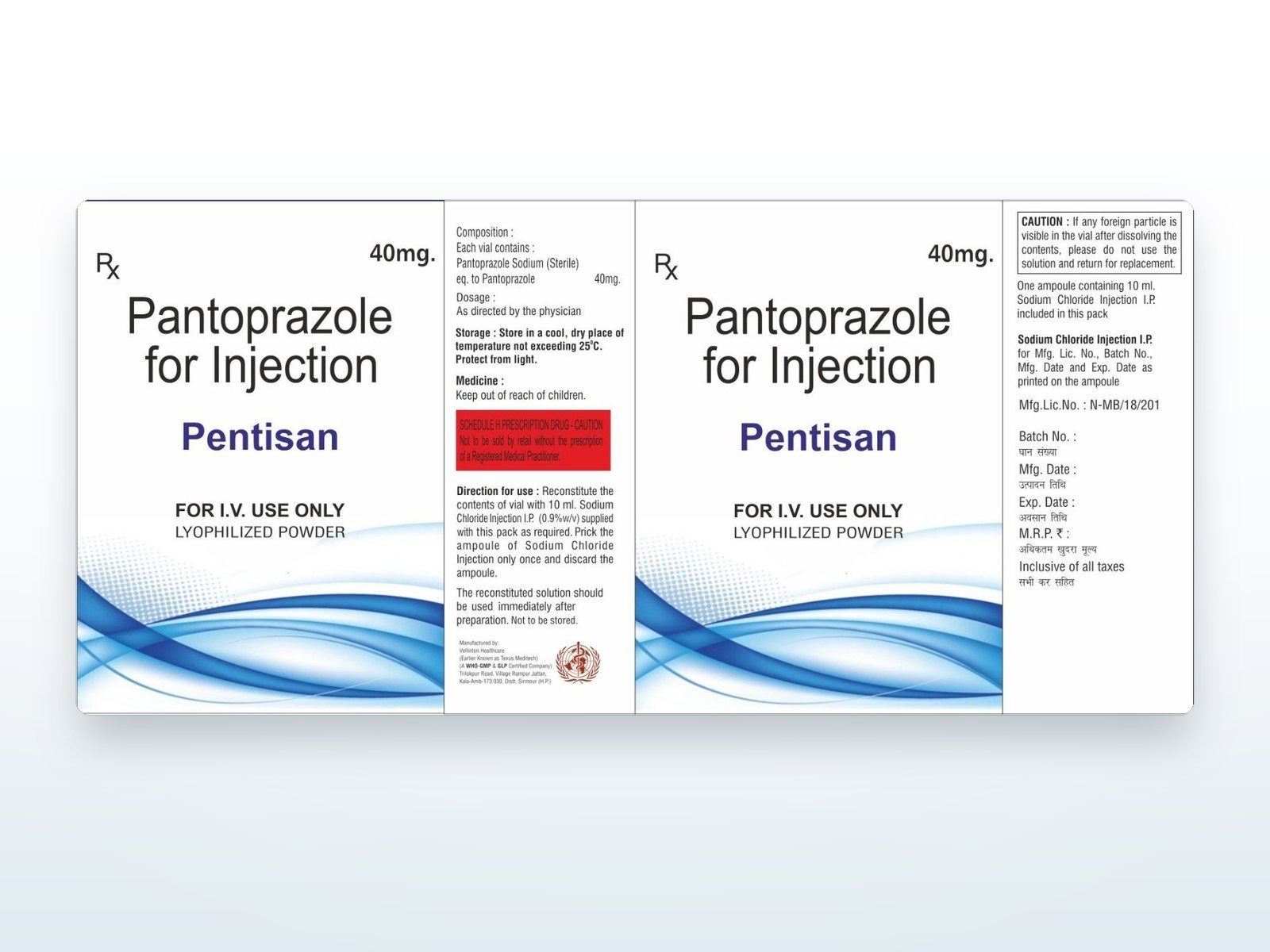
Administration: Pentisan 40mg Injection is administered intravenously by trained healthcare personnel. Unlike oral formulations, it is reserved for situations where immediate and effective acid control is necessary. The dosage and duration of therapy will, therefore, be tailored by your doctor according to your specific condition. For best results, it is essential to follow your doctor’s guidance consistently. Even though symptoms may subside early, treatment should be continued until advised otherwise to prevent relapse.
Side Effects: Common side effects include nausea, headache, flatulence, diarrhea, and dizziness. In some cases, thrombophlebitis or vein irritation may occur at the injection site. Nevertheless, these side effects are usually mild and temporary. However, if they persist or worsen, it is advisable to consult your healthcare provider for further evaluation and reassurance.
Precautions: Before initiating Pentisan treatment, it is important to inform your doctor about any liver conditions, or if you are pregnant or breastfeeding, or taking medications for HIV or osteoporosis. In addition, long-term use may slightly increase the risk of bone fractures; thus, your doctor may suggest calcium or vitamin D supplements. While on this medication, you should avoid alcohol, as it may stimulate excess acid production. Furthermore, if Pentisan makes you feel dizzy or drowsy, refrain from driving or operating heavy machinery.